Quick answer
What can I ask in this scenario?
Ask what a bed partner has noticed, including snoring or breathing pauses; whether the patient wakes choking; how sleepy they feel during the day; whether driving is affected; and about blood pressure, medicines, alcohol, and sedatives.
“Has anyone noticed that you snore loudly, stop breathing, gasp, or choke while you are asleep?”
Communication context
A realistic patient scenario
Imagine this consultation: A patient reports loud snoring, unrefreshing sleep, or excessive daytime sleepiness. Your task is to explore the history in natural English without overwhelming the patient with clinical jargon.
- Clinical area
- Pulmonology
- Your focus
- Clear, patient-friendly history taking
The clinical detail gives the language a realistic setting. This guide teaches communication, not diagnosis or treatment.
Useful questions for this scenario
Natural English questions, grouped by purpose
These are selected questions for this particular practice case. They are not an exhaustive clinical checklist.
The symptom story
“How sleepy do you feel during the day?”
“Have you ever nodded off when you did not mean to, especially while driving or stopped in traffic?”
Purpose: Assess daytime sleepiness and whether it creates a driving risk.
Why this wording
Nodded off is familiar everyday language, while the separate driving example makes the safety question explicit.
“Would it be all right if I measure your neck, height, and weight and look at the back of your throat?”
Purpose: Ask permission for relevant measurements and an airway examination.
Why this wording
This is a clear consent request rather than a history question, because the source objective requires examination and measurements.
“Do you drink alcohol or take any medicine that makes you sleepy in the evening?”
“Have you noticed whether either one affects your snoring or sleep?”
Purpose: Ask about evening alcohol or sedating medicines and their relationship to sleep symptoms.
Associated symptoms
“Has anyone noticed that you snore loudly, stop breathing, gasp, or choke while you are asleep?”
“Do you ever wake up gasping or choking?”
Purpose: Ask about observed snoring or breathing pauses and nighttime gasping.
Why this wording
Stop breathing is more patient-friendly than apnea, and asking what someone has noticed avoids claiming that a breathing pause occurred.
Health background
“Do you have high blood pressure, diabetes, or any heart conditions?”
“What medicines do you take for them?”
Purpose: Ask about relevant health conditions and current treatment without assuming poor blood pressure control.
Why this wording
The neutral questions do not claim that the patient's blood pressure is resistant or that it changed after the sleep symptoms began.
Put the phrases together
Move from open to focused questions
- Open
“Could you tell me more about what has been happening?”
- Focus
Choose a relevant question from the groups above.
- Check
“Is there anything else about this that you think I should know?”
Language note: Short, direct questions are often easier to answer. Ask one idea at a time, then follow the patient's wording when you need more detail.
Free · No card · No account
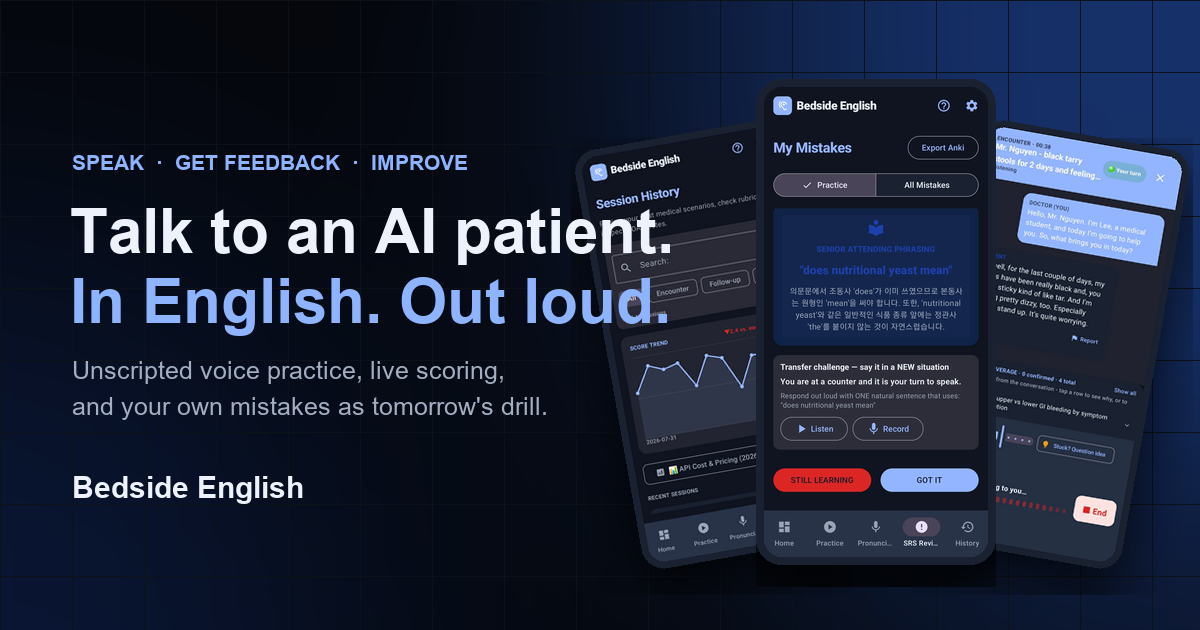
Practice this patient conversation out loud
Ask the questions in your own words, hear an AI patient respond, and use live feedback for your next speaking attempt.

Publication notes
About this guide
- Based on a simulated Bedside English clinical scenario.
- Phrases are selected and edited for patient-friendly clinical communication.
- Last editorial update: .