Quick answer
What can I ask in this scenario?
Start with an open question about the breathing trouble, then ask whether they hear a whistling sound, if symptoms wake them up at night, what triggers the episodes, and how quickly their rescue inhaler helps.
“Do you hear a high-pitched whistling sound when you breathe out, or feel tightness in your chest?”
Communication context
A realistic patient scenario
Imagine this consultation: A patient presents for evaluation of wheezing and breathing difficulty that worsens during physical activity. Your task is to explore the history in natural English without overwhelming the patient with clinical jargon.
- Clinical area
- Pulmonology
- Your focus
- Clear, patient-friendly history taking
The clinical detail gives the language a realistic setting. This guide teaches communication, not diagnosis or treatment.
Useful questions for this scenario
Natural English questions, grouped by purpose
These are selected questions for this particular practice case. They are not an exhaustive clinical checklist.
The symptom story
“Do you hear a high-pitched whistling sound when you breathe out, or feel tightness in your chest?”
Purpose: Ask whether the patient notices wheezing or chest tightness when breathing out.
Why this wording
Describing the sound as a “high-pitched whistling sound” helps patients identify wheezing even if they are unfamiliar with the clinical term.
“Do things like cold air, exercise, dust, or being around animals seem to bring on your breathing trouble?”
Purpose: Ask what environmental or physical factors seem to bring on breathing trouble.
Why this wording
Listing everyday examples like cold air, exercise, or dust gives patients helpful reference points without making the inquiry rigid.
“If you use a rescue inhaler, how quickly does it help ease your breathing?”
Purpose: Ask how quickly a rescue inhaler helps when breathing difficulty occurs.
Associated symptoms
“Do your cough or breathing symptoms tend to get worse at night or early in the morning?”
Purpose: Ask if coughing or breathing trouble is worse at night or early in the morning.
Why this wording
Asking about night and early morning timing helps identify variable airway patterns without presupposing how often waking occurs.
Health background
“Do you or anyone in your family have a history of asthma, allergies, or eczema?”
Purpose: Ask if the patient or family members have a history of asthma, allergies, or eczema.
Why this wording
Using everyday terms like “allergies” alongside “eczema” makes the question clearer than technical phrasing like “atopic triad” or “allergic rhinitis”.
Put the phrases together
Move from open to focused questions
- Open
“Could you tell me more about what has been happening?”
- Focus
Choose a relevant question from the groups above.
- Check
“Is there anything else about this that you think I should know?”
Language note: Short, direct questions are often easier to answer. Ask one idea at a time, then follow the patient's wording when you need more detail.
Free · No card · No account
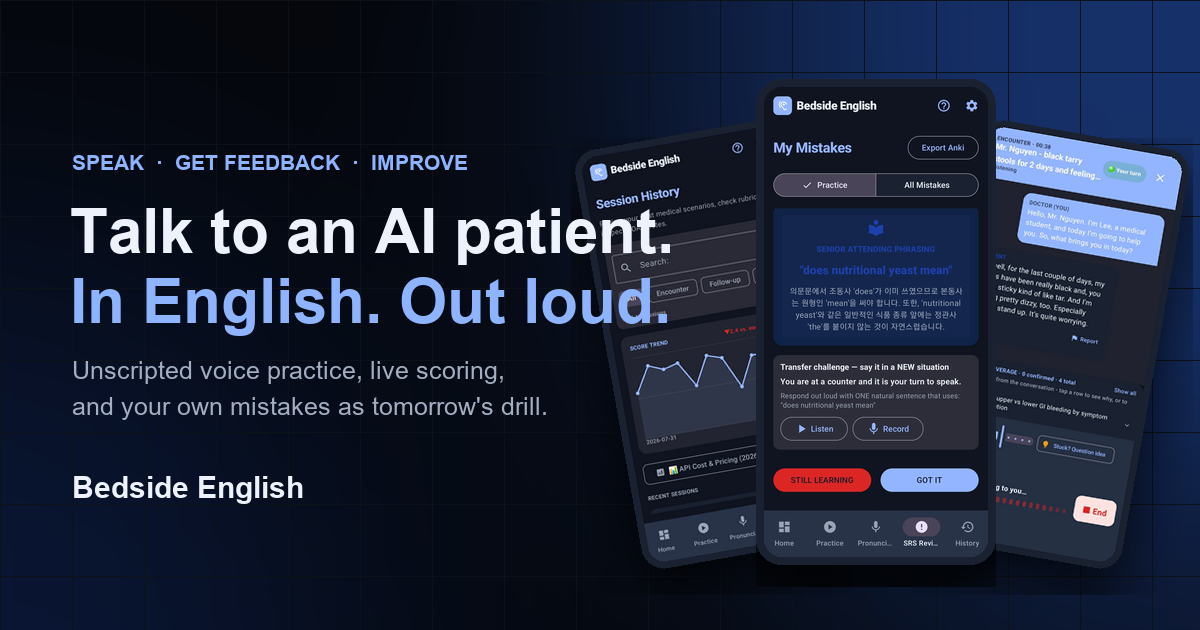
Practice this patient conversation out loud
Ask the questions in your own words, hear an AI patient respond, and use live feedback for your next speaking attempt.

Publication notes
About this guide
- Based on a simulated Bedside English clinical scenario.
- Phrases are selected and edited for patient-friendly clinical communication.
- Last editorial update: .