Quick answer
What can I ask in this scenario?
Ask about any symptoms, even mild ones, confirm the result was found on routine testing, ask about family history of thyroid disease, ask about pregnancy status, and ask about any weight or mood changes.
“Do you feel tired, or notice anything else, even mildly?”
Communication context
A realistic patient scenario
Imagine this consultation: A patient's routine blood test shows a slightly elevated thyroid level, with mild fatigue and no other clear symptoms. Your task is to explore the history in natural English without overwhelming the patient with clinical jargon.
- Clinical area
- Endocrinology
- Your focus
- Clear, patient-friendly history taking
The clinical detail gives the language a realistic setting. This guide teaches communication, not diagnosis or treatment.
Useful questions for this scenario
Natural English questions, grouped by purpose
These are selected questions for this particular practice case. They are not an exhaustive clinical checklist.
The symptom story
“Was this found on a routine blood test?”
Purpose: Confirm the result was found on a routine blood test, not because of a specific concern.
Associated symptoms
“Do you feel tired, or notice anything else, even mildly?”
Purpose: Ask about any symptoms at all, even mild or easy to overlook ones.
Why this wording
Adding ‘even mildly’ matters here, since this patient's symptoms are subtle enough that they might not think a small change is worth mentioning unless invited to.
“Any weight gain or changes in mood?”
Purpose: Ask about any weight gain or changes in mood.
Why this wording
Weight and mood changes are grouped into one question because patients experiencing early thyroid changes often notice one before the other, so asking about both increases the chance of catching a relevant symptom.
Health background
“Does thyroid disease run in your family?”
Purpose: Ask whether thyroid disease runs in the family.
“Are you pregnant or planning to become pregnant?”
Purpose: Ask about current or planned pregnancy, since it changes how this finding is managed.
Why this wording
This question matters more than it might seem for a ‘mild’ lab finding, because pregnancy, current or planned, changes the threshold for treating this condition, so it needs to be asked even when nothing else in the visit points to it.
Put the phrases together
Move from open to focused questions
- Open
“Could you tell me more about what has been happening?”
- Focus
Choose a relevant question from the groups above.
- Check
“Is there anything else about this that you think I should know?”
Language note: Short, direct questions are often easier to answer. Ask one idea at a time, then follow the patient's wording when you need more detail.
Free · No card · No account
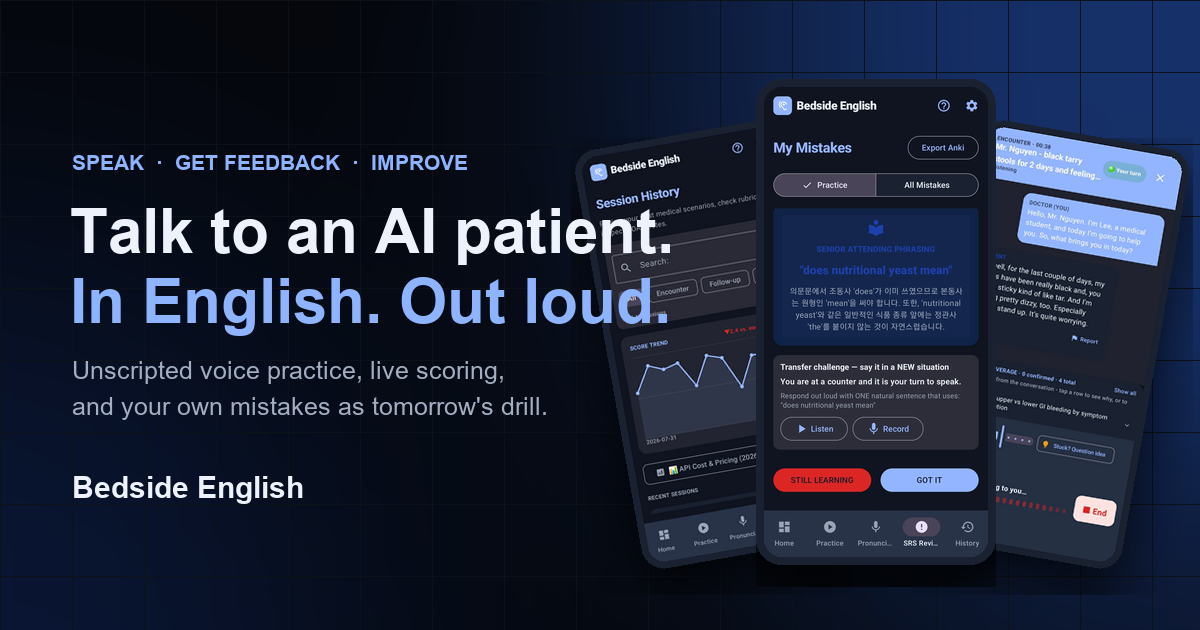
Practice this patient conversation out loud
Ask the questions in your own words, hear an AI patient respond, and use live feedback for your next speaking attempt.

Publication notes
About this guide
- Based on a simulated Bedside English clinical scenario.
- Phrases are selected and edited for patient-friendly clinical communication.
- Last editorial update: .