Quick answer
What can I ask in this scenario?
Ask whether the rash matches exactly where something touches the skin, how itchy it is, how soon after wearing the item it appeared, about past reactions to jewelry or metal, and whether there are any blisters.
“Is the rash exactly where your watch buckle touches your skin?”
Communication context
A realistic patient scenario
Imagine this consultation: A patient has an itchy, blistered rash exactly where a watch buckle touches the skin. Your task is to explore the history in natural English without overwhelming the patient with clinical jargon.
- Clinical area
- Derm
- Your focus
- Clear, patient-friendly history taking
The clinical detail gives the language a realistic setting. This guide teaches communication, not diagnosis or treatment.
Useful questions for this scenario
Natural English questions, grouped by purpose
These are selected questions for this particular practice case. They are not an exhaustive clinical checklist.
The symptom story
“Is the rash exactly where your watch buckle touches your skin?”
Purpose: Confirm the rash appears exactly where the skin contacts the item.
Why this wording
Confirming this precise match between the rash's shape and the contact point is one of the most useful clues in this history, and it's a detail patients can usually check and confirm right away.
“How itchy is it?”
Purpose: Ask how itchy the rash is.
“How long after wearing the watch did the rash appear?”
Purpose: Ask how long after starting to wear the item the rash appeared.
Why this wording
Asking about the delay between contact and the rash appearing, rather than just ‘when did it start,’ captures a timing pattern that's typical of this kind of skin reaction.
“Are there any blisters?”
Purpose: Ask whether there are any blisters.
Health background
“Have you ever reacted to other jewelry, belt buckles, or metal snaps on clothing before?”
Purpose: Ask about past reactions to other jewelry or metal snaps.
Why this wording
Listing a few common everyday examples helps the patient recall a pattern they may not have connected together before, since each individual reaction might have seemed unrelated at the time.
Put the phrases together
Move from open to focused questions
- Open
“Could you tell me more about what has been happening?”
- Focus
Choose a relevant question from the groups above.
- Check
“Is there anything else about this that you think I should know?”
Language note: Short, direct questions are often easier to answer. Ask one idea at a time, then follow the patient's wording when you need more detail.
Free · No card · No account
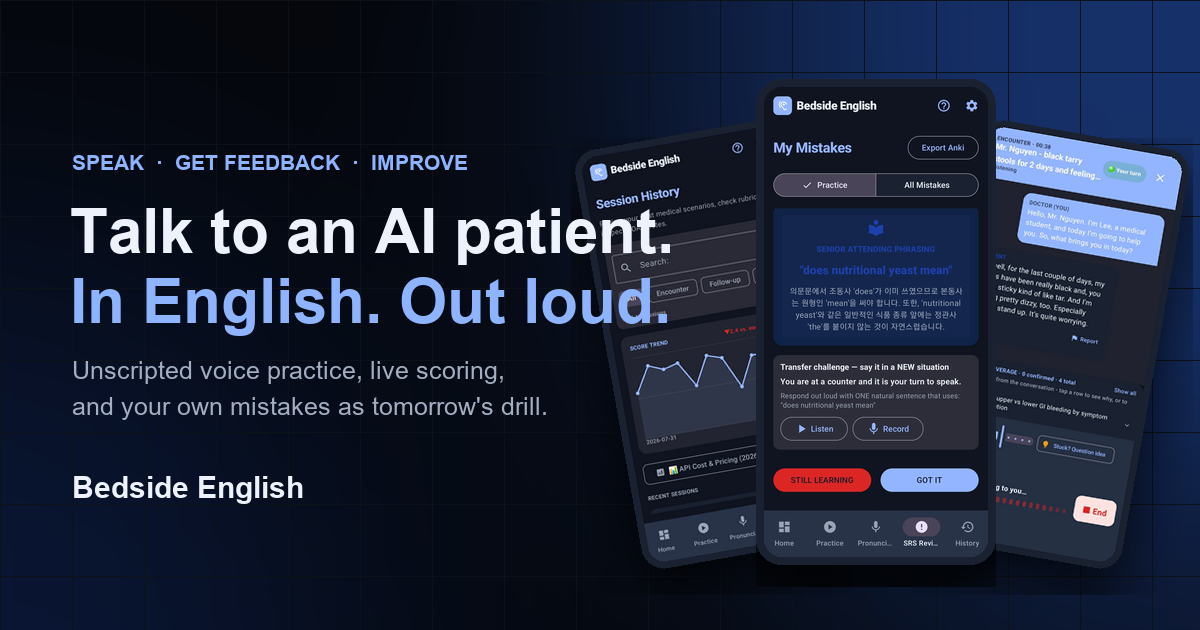
Practice this patient conversation out loud
Ask the questions in your own words, hear an AI patient respond, and use live feedback for your next speaking attempt.

Publication notes
About this guide
- Based on a simulated Bedside English clinical scenario.
- Phrases are selected and edited for patient-friendly clinical communication.
- Last editorial update: .