Quick answer
What can I ask in this scenario?
Ask about warning symptoms like headache or vision changes, how the high reading was found, lifestyle factors like salt intake and exercise, family history, and what concerns the patient about medication.
“Do you have any headaches, chest pain, or vision changes?”
Communication context
A realistic patient scenario
Imagine this consultation: A patient's blood pressure was found to be elevated during a routine checkup, with no symptoms. Your task is to explore the history in natural English without overwhelming the patient with clinical jargon.
- Clinical area
- Family Medicine
- Your focus
- Clear, patient-friendly history taking
The clinical detail gives the language a realistic setting. This guide teaches communication, not diagnosis or treatment.
Useful questions for this scenario
Natural English questions, grouped by purpose
These are selected questions for this particular practice case. They are not an exhaustive clinical checklist.
The symptom story
“Was this found on a routine check, and was it confirmed on a repeat measurement?”
Purpose: Confirm that the reading was taken on a routine visit and rechecked.
Associated symptoms
“Do you have any headaches, chest pain, or vision changes?”
Purpose: Screen for headache, chest pain, or vision changes, which would need urgent attention.
Why this wording
This question is asked before anything else because a ‘yes’ answer would change the urgency of the whole visit — asking it first mirrors real clinical prioritization.
Health background
“Do you add a lot of salt to your food, and how often do you exercise?”
Purpose: Ask about salt intake and exercise, which affect blood pressure.
Why this wording
‘Add salt to your food’ is more concrete than asking about ‘sodium intake,’ which most patients would need translated anyway.
“Does high blood pressure or stroke run in your family?”
Purpose: Ask whether high blood pressure or stroke runs in the family.
The patient's perspective
“What worries you about needing to take medication for this?”
Purpose: Find out what worries the patient about needing to take medication.
Why this wording
Since this patient has never taken blood pressure medication before, asking about worries directly — rather than assuming reluctance or assuming easy acceptance — lets the patient's actual concern guide what you explain next.
Put the phrases together
Move from open to focused questions
- Open
“Could you tell me more about what has been happening?”
- Focus
Choose a relevant question from the groups above.
- Check
“Is there anything else about this that you think I should know?”
Language note: Short, direct questions are often easier to answer. Ask one idea at a time, then follow the patient's wording when you need more detail.
Free · No card · No account
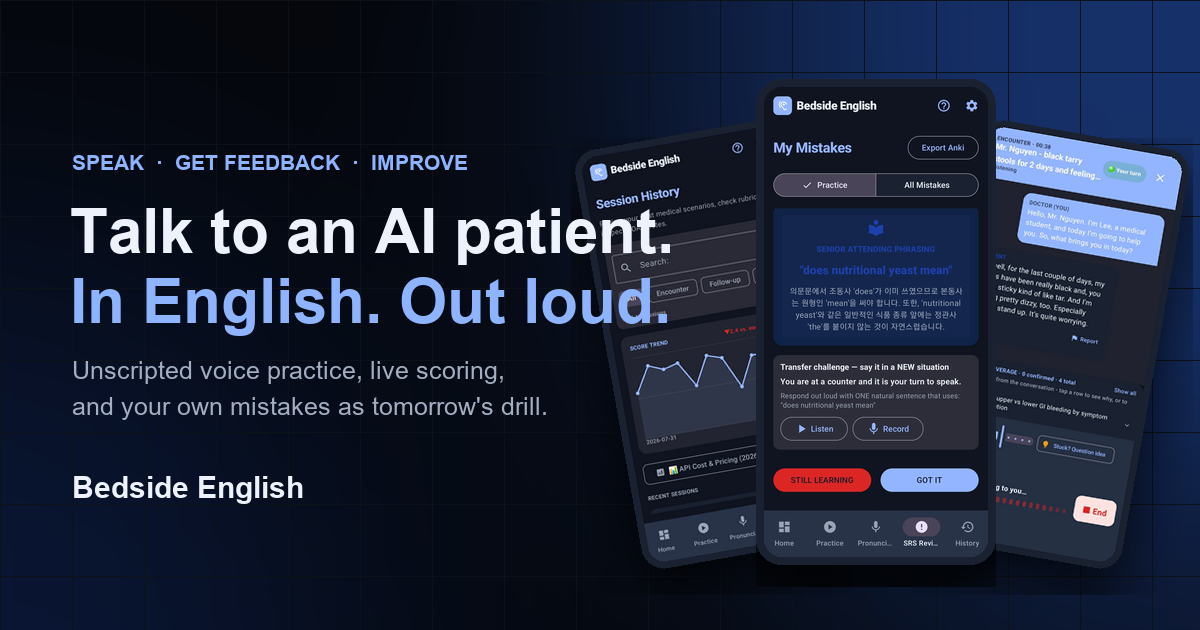
Practice this patient conversation out loud
Ask the questions in your own words, hear an AI patient respond, and use live feedback for your next speaking attempt.

Publication notes
About this guide
- Based on a simulated Bedside English clinical scenario.
- Phrases are selected and edited for patient-friendly clinical communication.
- Last editorial update: .