Quick answer
What can I ask in this scenario?
Ask which fingers are affected, whether it wakes the patient at night, whether shaking the hand helps, whether their work involves repetitive hand movements, and whether there's any weakness or dropping objects.
“Which fingers feel numb or tingly — your thumb, index, and middle finger?”
Communication context
A realistic patient scenario
Imagine this consultation: A patient describes wrist pain and tingling in her fingers that is worse at night. Your task is to explore the history in natural English without overwhelming the patient with clinical jargon.
- Clinical area
- Neurology
- Your focus
- Clear, patient-friendly history taking
The clinical detail gives the language a realistic setting. This guide teaches communication, not diagnosis or treatment.
Useful questions for this scenario
Natural English questions, grouped by purpose
These are selected questions for this particular practice case. They are not an exhaustive clinical checklist.
The symptom story
“Which fingers feel numb or tingly — your thumb, index, and middle finger?”
Purpose: Find out exactly which fingers are affected.
Why this wording
Naming the specific fingers as a starting suggestion, rather than asking an open ‘where,’ helps the patient localize the sensation precisely, since ‘my fingers’ alone is often too vague to be useful.
“Does this wake you up at night?”
Purpose: Ask whether the numbness or tingling wakes the patient at night.
“Does shaking your hand make it feel better?”
Purpose: Ask whether shaking or flicking the hand makes the symptoms better.
Why this wording
This is a small, easy-to-answer physical detail that most patients have actually noticed themselves without knowing it's clinically meaningful — asking about it directly often produces a confident, specific answer.
Associated symptoms
“Have you noticed any weakness in your grip or dropping things?”
Purpose: Ask whether there's been any weakness in the grip or dropping objects.
Daily life and context
“Do you do a lot of typing or repetitive hand work?”
Purpose: Ask about repetitive hand movements at work or in daily activities, like typing.
Put the phrases together
Move from open to focused questions
- Open
“Could you tell me more about what has been happening?”
- Focus
Choose a relevant question from the groups above.
- Check
“Is there anything else about this that you think I should know?”
Language note: Short, direct questions are often easier to answer. Ask one idea at a time, then follow the patient's wording when you need more detail.
Free · No card · No account
Practice this patient conversation out loud
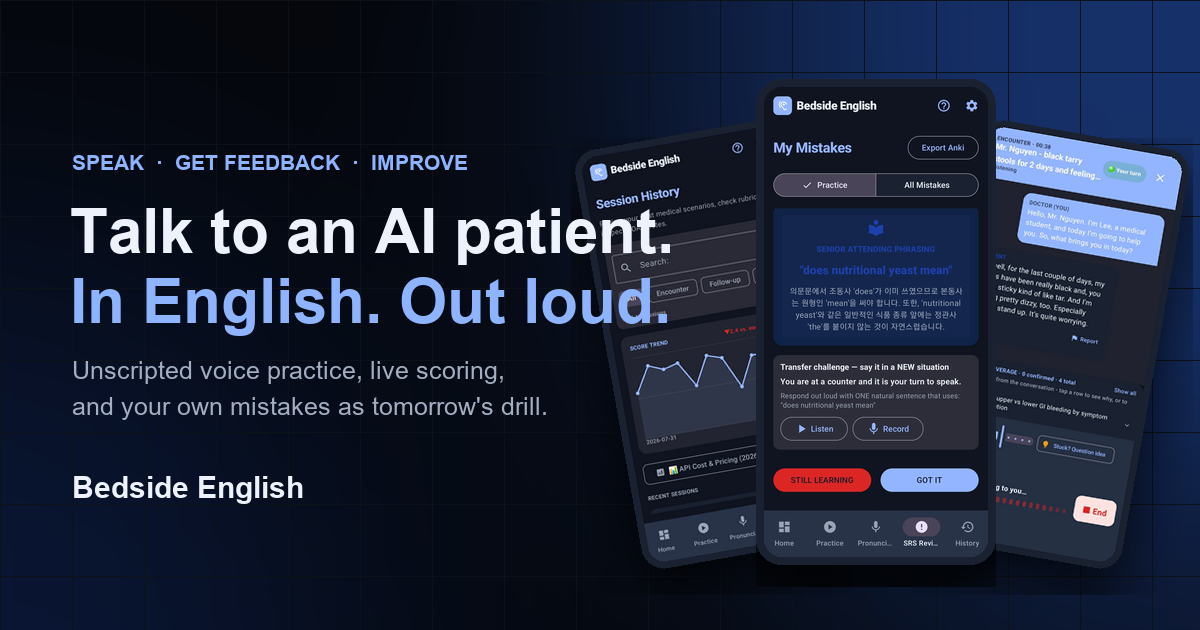
Ask the questions in your own words, hear an AI patient respond, and use live feedback for your next speaking attempt.

Publication notes
About this guide
- Based on a simulated Bedside English clinical scenario.
- Phrases are selected and edited for patient-friendly clinical communication.
- Last editorial update: .