Quick answer
What can I ask in this scenario?
Ask how the injury happened, whether feeling in the fingertip is normal, whether the finger can still bend, whether the bleeding is under control, and when the patient last had a tetanus shot.
“How did this happen?”
Communication context
A realistic patient scenario
Imagine this consultation: A patient comes in with a clean cut on the index finger after a kitchen knife accident. Your task is to explore the history in natural English without overwhelming the patient with clinical jargon.
- Clinical area
- Em
- Your focus
- Clear, patient-friendly history taking
The clinical detail gives the language a realistic setting. This guide teaches communication, not diagnosis or treatment.
Useful questions for this scenario
Natural English questions, grouped by purpose
These are selected questions for this particular practice case. They are not an exhaustive clinical checklist.
The symptom story
“How did this happen?”
Purpose: Ask how the injury happened.
Why this wording
A simple, open ‘how did this happen’ is usually enough for a straightforward cut, and it often reveals useful detail, like how deep or dirty the object was, without needing a longer, more clinical question.
“Can you bend your finger?”
Purpose: Ask the patient to bend the finger, to check that the tendon is working.
Why this wording
This is phrased as an instruction to actually try it, not just a question, because directly watching the finger bend is more reliable than asking the patient to judge their own tendon function.
“Is the bleeding controlled?”
Purpose: Confirm the bleeding is currently under control.
Associated symptoms
“Does your fingertip feel normal, or is any part of it numb?”
Purpose: Check whether feeling in the fingertip is normal, to screen for nerve injury.
Why this wording
Asking specifically about numbness, not just ‘can you feel it,’ gives a clearer answer, since patients sometimes say yes even when a small area is numb, unless the question is precise.
Health background
“When was your last tetanus shot?”
Purpose: Ask when the patient last had a tetanus shot.
Put the phrases together
Move from open to focused questions
- Open
“Could you tell me more about what has been happening?”
- Focus
Choose a relevant question from the groups above.
- Check
“Is there anything else about this that you think I should know?”
Language note: Short, direct questions are often easier to answer. Ask one idea at a time, then follow the patient's wording when you need more detail.
Free · No card · No account
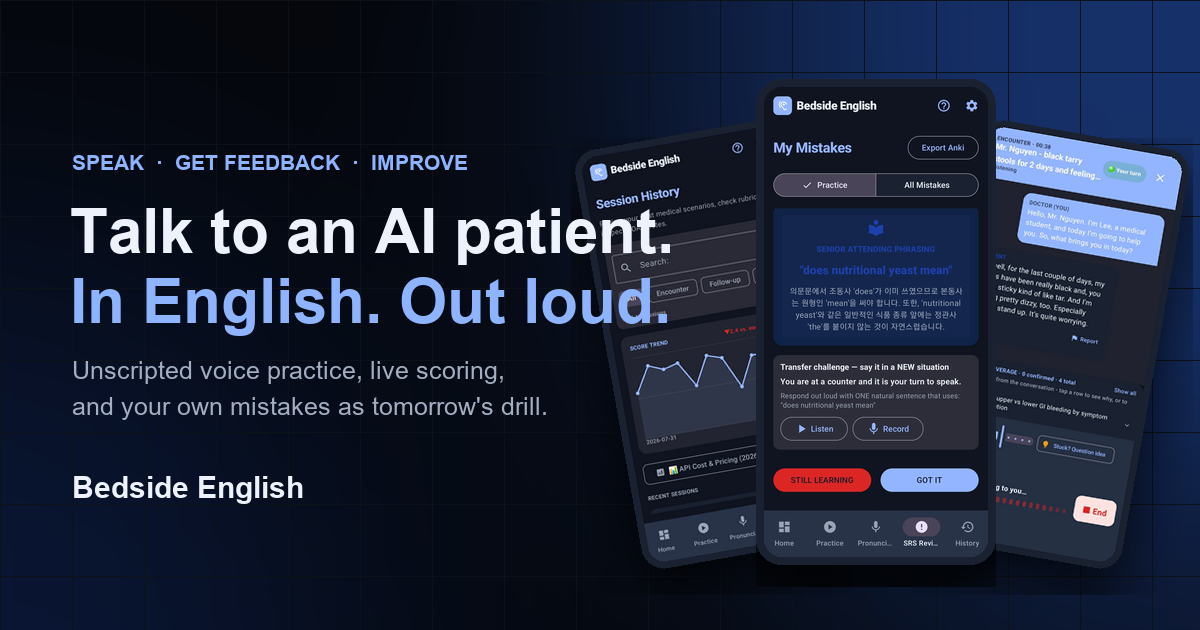
Practice this patient conversation out loud
Ask the questions in your own words, hear an AI patient respond, and use live feedback for your next speaking attempt.

Publication notes
About this guide
- Based on a simulated Bedside English clinical scenario.
- Phrases are selected and edited for patient-friendly clinical communication.
- Last editorial update: .